Application-Specific Neuromorphic Intelligence.
We design neuromorphic chips optimized for one specific task, delivering efficient image processing and filtering across satellites, drones, smart cameras and edge systems.
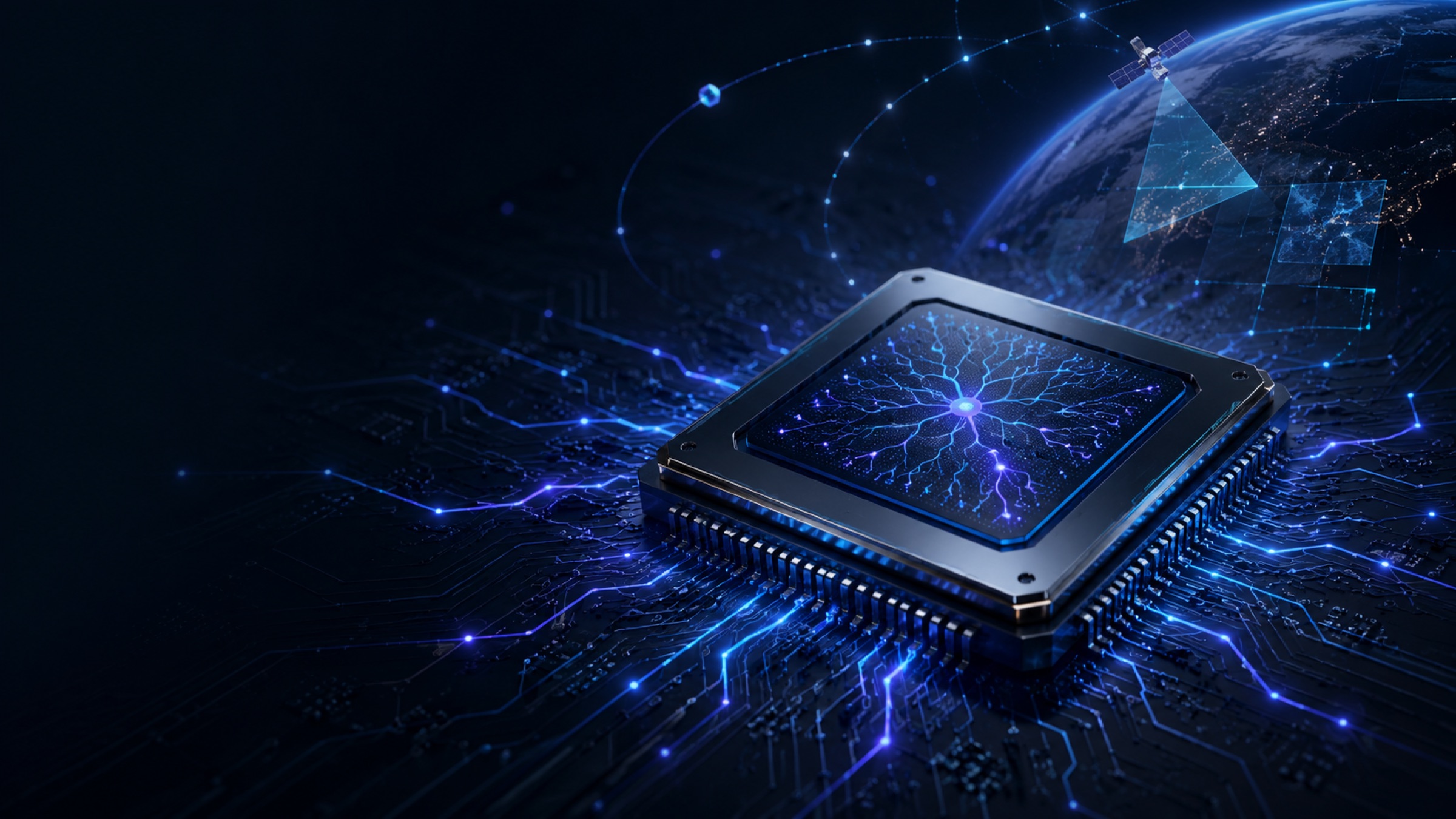
Neuromorphic chips built around a single task.
MNEXIS designs application-specific neuromorphic processors. Rather than a general-purpose AI accelerator, each chip is shaped around one job: seeing, understanding and filtering images at the point of capture.
Spiking neural networks
Our systems compute with spikes instead of dense frame-by-frame arithmetic. Activity follows change in the scene, so a static or empty field of view costs almost nothing to watch.
Image processing and filtering
The core capability is vision at the point of capture: read the camera stream, detect the target objects a system cares about, and pass on only the frames that actually contain them.
Hardware shaped by the task
The datapath, memory and network topology are chosen around the target workload. What a given application never needs is not built into the silicon in the first place.
Image input
Frames arrive from the sensor as a batch or a live stream.
Preprocessing
Resize, normalize and denoise to cut cost before inference.
Spike encoding
Pixel data becomes spike and event streams.
SNN inference
The network scores each frame against the target definition.
Decision
Keep, flag or discard, according to the mission's criteria.
General-purpose silicon pays for
flexibility it never uses.
A general AI processor has to be ready for any model anyone might run on it. That readiness costs area, power and time on every single inference. When the task is known and fixed, most of that cost can be designed away.
Any model, unknown when the chip is designed
One task, fixed before the architecture is drawn
Full frames pushed through deep memory hierarchies
Sparse spikes, kept close to the compute that uses them
Every pixel processed on every frame, always
Work follows change in the scene
Area reserved for cases this system will never run
Only the datapath the application actually needs
Raw stream, filtered somewhere downstream
Only the frames that met the mission's criteria
Lower energy per decision
Removing generality removes the switching activity that pays for it. Sparse, event-driven compute keeps the average draw low between events.
Lower latency
The verdict is produced where the image is captured. There is no queue to a host processor and no round trip to a network.
Less redundant computation
A fixed target means the network can be small. Frames that clearly hold nothing are dismissed early instead of being processed in full.
Less data moved
Filtering at the sensor cuts what has to be stored, transmitted or paid for downstream, which is usually where the real cost sits.
These are the objectives the architecture targets. Power, latency and throughput figures for our current system are being measured on hardware now, and we will publish them once the campaign is complete.
One architecture, retargeted per mission.
The same neuromorphic core is specialized around whatever a given system has to see. These are the domains we build for, and the shape of problem the approach fits.
Space imaging
Onboard filtering of Earth observation imagery, so that scarce downlink windows carry frames that actually contain the target and not empty ocean or cloud.
See the prototypeDrone vision
Target detection and tracking on battery-powered platforms, where every watt spent on compute is flight time lost and every cloud round trip is latency added.
Smart city and security cameras
Event and object detection on the camera itself. No continuous upload, no storage bill for footage in which nothing happens, no cloud dependency for a local decision.
Autonomous systems
Low-latency perception for robots and vehicles that have to react before a frame could reach a remote processor and come back with an answer.
Industrial edge vision
Inspection and anomaly detection on the line, at a fixed low power budget, with no dependence on a network link to keep running.
Something else?
If your system has one visual decision to make, over and over, under a hard power or bandwidth budget, that is exactly the shape of problem this architecture is built for.
Space is where our first system runs today. The sections below cover what exists, what is being measured, and what is still ahead.

Space is our first application, not our only market.
It is the domain where the constraint is sharpest, so it is where we proved the architecture first. Everything the satellite system does, a drone or a fixed camera needs a version of.
Onboard image filtering for satellites.
Our first working system is an application-specific neuromorphic pipeline for Earth observation. It analyzes imagery onboard as it is captured, identifies the frames that contain the mission's targets, and is designed to reduce how much worthless data is queued for downlink.
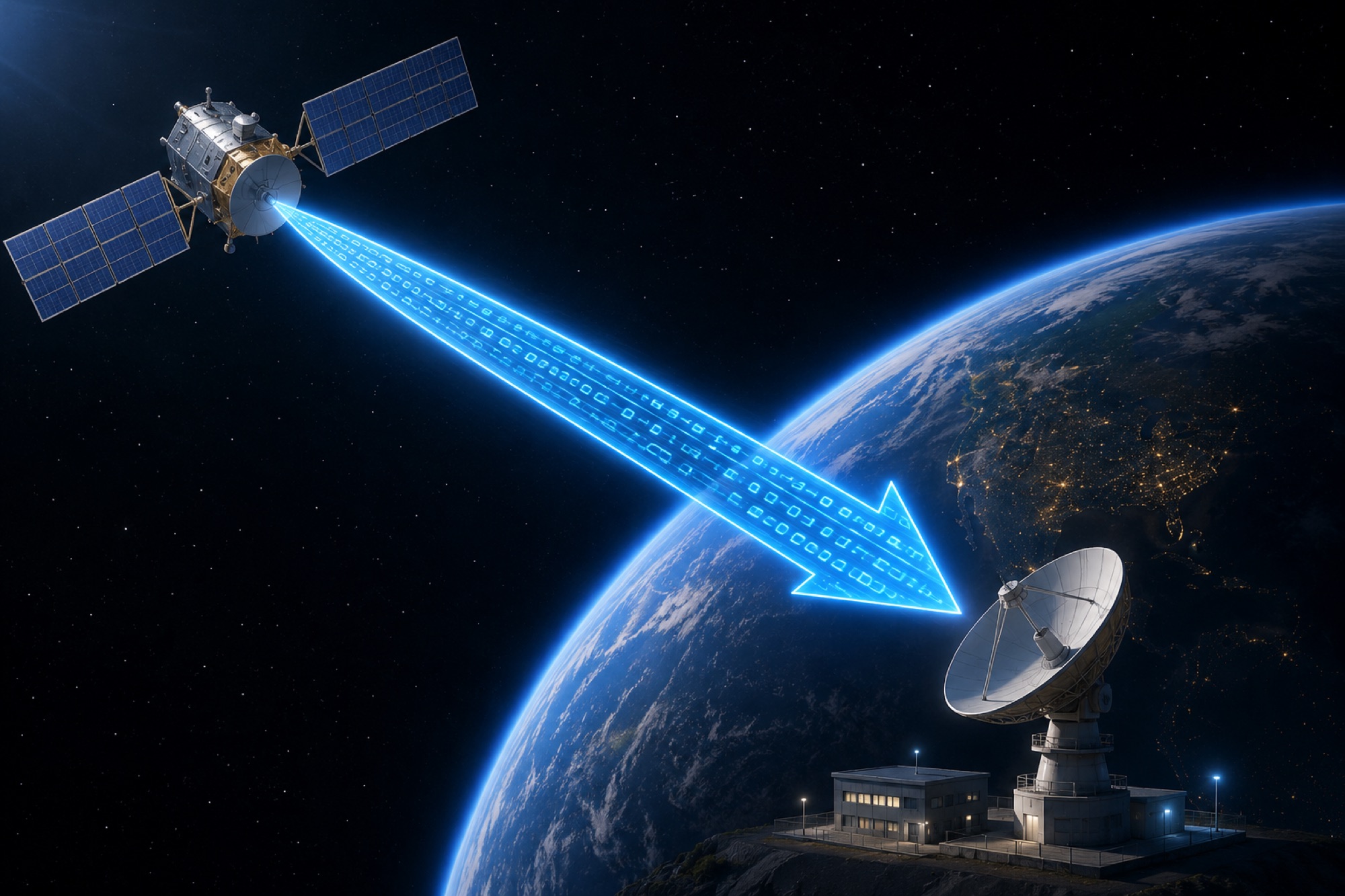
The real cost is not capturing the image. It is transmitting data that should have been filtered onboard.
Limited power budget
Every watt spent processing images that will be discarded is a watt taken from the mission.
Limited downlink bandwidth
Scarce channel time fills with imagery that gets thrown away once it reaches the ground.
Expensive onboard compute
Classical CPU and GPU pipelines are power hungry and struggle to decide in real time at the edge.
Most frames are not critical
Clouds, empty ocean and repeat scenes rarely earn the energy and time it costs to send them.
Onboard, at capture
Frames are analyzed in orbit the moment they are taken. Nothing has to reach the ground before a decision is made.
Target detection
A spiking neural network scores each frame against the objects the mission defined as valuable.
Keep or discard
Frames that carry a target are queued for downlink. The rest are dropped instead of consuming channel time.
Operator-defined criteria
Target class and thresholds are configured per customer and per mission. The operator decides what counts as signal.
- End-to-end model and training pipeline
- Filtering model for the target scenario
- Mapping onto Xilinx FPGA
- Simulation and testbench
- Power and energy measurement on hardware
- Latency and throughput characterization
- Accuracy against real Earth observation imagery
- Customer pilot deployments
- Dedicated ASIC
- Flight heritage and in-orbit validation
Image Preprocessing
Resize, normalize and denoise incoming frames to lower cost before any inference runs.
Spike Encoding Engine
Convert image data into spike and event streams so compute follows meaningful change.
SNN Inference Engine
Run the spiking neural network that scores and classifies each frame in real time.
FPGA Execution Layer
Map the model onto Xilinx FPGA for low-power, deterministic operation at the edge.
Data Pipeline & Interface
Move data between sensor, processor and host through a clean, configurable interface.
Evaluation & Metrics
Measure accuracy, power, latency and throughput continuously against the KPIs.
From working prototype to a family of chips.
We have a validated pipeline and a mapped FPGA prototype today. The path ahead runs through measurement and pilots with real operators, toward dedicated silicon and then application-specific variants of it.
Foundation
- Product requirements
- Model and training pipeline
- Initial filtering model
FPGA prototype
- FPGA mapping
- Simulation and testbench
- Prototype validation on hardware
Measurement
- Power and energy figures
- Latency and throughput
- Accuracy on real imagery
Customer pilots
- Pilots with operators
- Live mission workflows
- Dataset expansion
Dedicated silicon
- ASIC architecture and design freeze
- Variants for drone and camera vision
- Space-ready qualification path
The same core, specialized again and again.
Every validated application narrows what the final silicon has to contain. The FPGA prototype exists so that the ASIC can be right, and so the next chip after it can be built faster than the first.
The architecture stays
Spike encoder, SNN fabric and decision layer are the same building blocks in every chip we design. That is the part we keep investing in.
The specialization changes
What moves is the target the network is trained on, the resolution and frame rate it has to hold, and the power envelope the hardware is sized for.
Not a rebuild each time
A drone chip and a satellite chip share a lineage. Moving between them is a specialization step, not a new company and not a new architecture.
Compute is moving to the sensor
Across every imaging market, the industry is pushing intelligence toward the point of capture rather than the data center.
Onboard AI is proven
ESA's Φsat-2 mission showed that AI running on the satellite is a real mission capability, not a laboratory demonstration.
Sensors outpace links
Cameras keep getting cheaper and denser. Bandwidth, batteries and power budgets do not scale with them.
A market compounding on every edge.
Neuromorphic sensing and edge AI are scaling across every sector that puts a camera in the field. Space is where we start; it is one slice of what the architecture addresses.
Neuromorphic sensor market
Market value, USD billions
Image sensors already make up 34.8% of the neuromorphic sensor market, the largest and fastest-scaling segment. That is exactly the segment our chips are designed for.
Our route into real mission requirements for the satellite application.
Earth observation gives us multiple entry points inside one customer base. Drone and camera-network vendors follow the same architecture.
Tell us the one thing your system has to see.
We design neuromorphic chips around a single visual task. If you operate satellites, fly drones, run camera networks, build autonomous systems, or invest in deep tech, we would like to talk.